
Blog

Automatic Sliding Doors for Commercial Entrances: Cost, Options, and Staying Accessibility-Compliant

Automatic Sliding Doors for Commercial Entrances: Cost, Options, and Staying Accessibility-Compliant

Automatic sliding door cost depends on the opening width, the configuration you choose, and whether you need standard or telescopic panels for a tight space. Beyond price, the bigger requirement in Canada is barrier-free access, since your provincial code often demands an accessible entrance at commercial buildings. Getting both right means matching the door to your opening and confirming it meets local accessibility rules before you buy.

Why Accessibility Drives the Decision

In Canada, barrier-free access is not a nice-to-have, it is written into building code. Each province adopts the National Building Code and adds its own requirements, and Quebec enforces its Construction Code with barrier-free provisions for public and commercial buildings. Automatic doors are one of the cleanest ways to meet those rules, because they open on approach with no pull force required, which is exactly what an accessible entrance needs. That is why so many new storefronts, clinics, and offices default to an automatic entrance rather than a manual one. Confirm the specifics with your local authority, since the details shift by jurisdiction and building use.

How Automatic Sliding Doors Work

A sensor detects someone approaching, the operator slides the panels open, and they close again once the path is clear. The appeal for a commercial entrance is steady, hands-free traffic flow and a tight seal when the door is shut, which helps hold heat through a cold season. Sliding systems also handle high pedestrian volume better than a swing door, since nothing arcs out into the walking path. For most retail and institutional entrances, that combination of accessibility and flow is the whole reason to go automatic.

Standard Linear Versus Telescopic

The main choice is how the panels stack when they open. A standard linear door slides its panels straight back alongside the opening, which works well when you have wall space beside the entrance to receive them. Our linear automatic sliding door suits the typical entrance where that side clearance exists. When the opening is wide but the surrounding wall space is tight, a telescopic system stacks the panels closer together to clear a larger passage in less room. Our telescopic automatic sliding door is built for exactly that situation, giving you a bigger clear opening without the wall space a linear door would need.

What Drives the Cost

Several factors move the price. A wider opening needs a larger operator and more glass. A telescopic configuration costs more than a straightforward linear one because it uses more panels and a more involved mechanism. Sensors, safety beams, and the level of glazing all add to the total, as does any electrical or structural work at the opening. As with most entrances, the cheapest quote is worth a second look to see whether it includes the operator, the safety sensors, and the accessibility hardware.

The Trade-Offs at a Glance

  • Linear sliding: Simpler and lower cost, needs wall space beside the opening.
  • Telescopic sliding: Clears a wider opening in tight space, costs more.
  • Traffic flow: Sliding handles high pedestrian volume without arcing into the path.
  • Accessibility: Automatic operation meets barrier-free rules with no pull force needed.
  • Energy: A tight seal when closed helps hold temperature in winter.
  • Cost drivers: Opening width, configuration, sensors, and glazing all move the price.

How to Choose for Your Entrance

Start with the opening. Measure the width and check how much wall space sits beside it, since that decides whether a linear or telescopic system fits. Next, confirm the accessibility requirements for your building type with your local authority, so the door meets code from day one rather than needing changes later. Then factor in your traffic volume and the climate seal you want. With those details settled, a quote becomes something you can compare fairly rather than a guess.

FAQ

How much do commercial automatic sliding doors cost? It depends on opening width, whether you choose linear or telescopic, and the sensors and glazing you need. A wider or telescopic setup costs more than a basic linear door.

Are automatic doors required for accessibility in Canada? Barrier-free access is required by building code for many commercial and public buildings, and automatic doors are a common way to meet it. Confirm the exact rule with your local authority.

What is the difference between linear and telescopic sliding doors? Linear panels slide straight back and need wall space beside the opening. Telescopic panels stack closer together to clear a wider opening in less space.

Do automatic sliding doors help with energy costs? Yes. They seal tightly when closed and only open when needed, which limits how long the entrance stays open and helps hold indoor temperature.

Which is better for a busy entrance, sliding or swing doors? Sliding doors usually handle high pedestrian traffic better, since the panels do not arc out into the walking path the way a swing door does.

Why Does My Commercial Garage Door Open Slowly or Stop Halfway? Common Causes and Fixes

Why Does My Commercial Garage Door Open Slowly or Stop Halfway? Common Causes and Fixes

A commercial garage door that opens slowly or stops halfway usually points to one of a few things: a worn or straining operator, spring tension that has slipped, an obstruction or damage in the tracks, or a sensor and safety fault telling the door to stop. Some of these are quick checks you can do yourself, while others involve high-tension parts that need a technician. Knowing which is which saves you a dangerous fix and a stalled shift.

Start With the Simple Checks

Before assuming the worst, rule out the easy stuff. Look along the tracks for a stone, a piece of packaging, or built-up debris that could be blocking travel. Check that nothing is leaning against the door and that the photo-eye sensors near the floor are clean and lined up, since a bumped sensor will stop a door partway. These take a few minutes and solve a surprising share of halfway-stop problems without any tools.

A Straining or Worn Operator

If the door moves but crawls, the operator is a likely suspect. A motor that is undersized for how often the door cycles wears down over time and loses the strength to move the door at full speed. Older operators also slow as their internal parts wear. On a busy dock this shows up as a door that used to snap open and now labors. If your opening cycles constantly, it may be worth looking at whether a faster system like a high-speed door fits your traffic better than an aging standard operator trying to keep up.

Spring Tension Problems

The springs do most of the lifting, and the operator only guides the door. When a spring loses tension or breaks, the operator suddenly has to haul the full weight of the door on its own, which makes it slow, strain, or stop partway. This is the one to be careful with. Garage door springs hold enormous tension, and adjusting or replacing them without the right tools and training causes serious injuries every year. This is a technician job, not a weekend project.

Track and Roller Damage

A door that binds or sticks at the same spot every time often has a track issue. Bent track, a loose bracket, or worn rollers create a snag point where the door slows or halts. A forklift bump is a common cause on industrial openings. Minor debris you can clear yourself, but bent track and failing rollers need proper repair, since forcing a door through a bad spot only worsens the damage and can throw it off track entirely.

Sensor and Safety Faults

Commercial doors are built to stop the moment something seems wrong, which is a safety feature working as intended. Misaligned photo-eyes, a faulty limit switch, or a control board glitch can all cut a door's travel short. If the door reverses or stops with nothing in the way, the system likely thinks there is an obstruction. Realigning a sensor is simple, but a limit switch or control fault usually calls for a service visit.

The Trade-Offs at a Glance

  • Obstruction or debris: Safe to check and clear yourself.
  • Dirty or bumped sensors: Simple to clean and realign.
  • Worn operator: Needs a technician, may signal an upgrade.
  • Spring problems: High tension, never a DIY fix.
  • Bent track or rollers: Needs proper repair to avoid a full off-track failure.
  • Control or limit faults: Usually a service call.

When to Call a Technician

The rule of thumb is simple. Clearing debris, cleaning sensors, and checking for obvious obstructions are fair game. Anything involving springs, the operator's internals, bent track, or the control system belongs to a trained tech, both for your safety and to avoid turning a small issue into a big one. If the door is still slow or stalling after the easy checks, our commercial door repair service can diagnose it and get the opening running before it stops a whole shift.

FAQ

Why does my commercial garage door open slowly? Usually a straining or worn operator, or springs that have lost tension so the motor has to do more work. Both slow the door down.

Why does my garage door stop halfway? Often an obstruction in the tracks, a misaligned safety sensor, or a limit switch fault telling the door to stop. Check the tracks and sensors first.

Can I fix a slow garage door myself? You can safely clear debris and clean sensors. Springs, the operator, and track repairs should be left to a technician because of the risk involved.

How do I know if my garage door spring is broken? The door suddenly feels very heavy, the operator strains or stalls, and you may see a visible gap in the spring coil. Do not try to adjust it yourself.

Why does my garage door reverse before it opens all the way? The safety system likely senses an obstruction, often from a dirty or misaligned photo-eye sensor or a control fault. Cleaning and realigning the sensors is the first step.
How Often Should You Service Commercial and Industrial Doors? A Preventive Maintenance Schedule

How Often Should You Service Commercial and Industrial Doors? A Preventive Maintenance Schedule

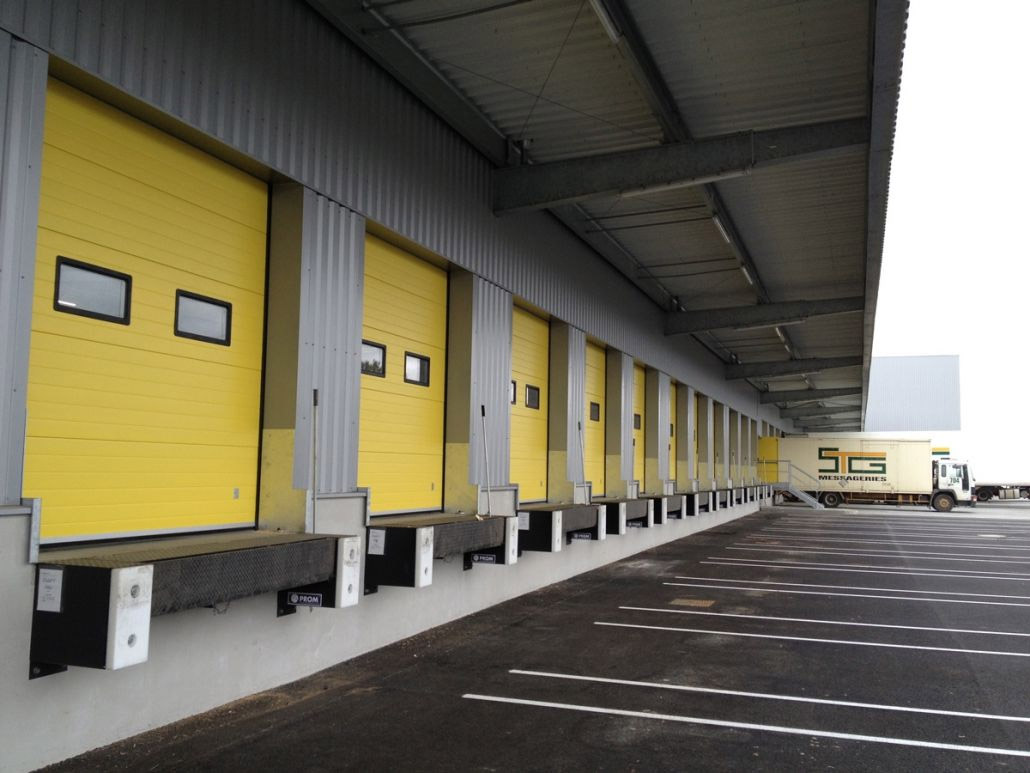
Most commercial and industrial doors should get a professional service at least once or twice a year, with quick visual checks done monthly by your own staff. High-cycle doors and busy loading dock equipment need attention more often, sometimes quarterly, because they wear faster. The right interval comes down to how hard the door works, so a door that cycles all day gets seen more than one that opens twice a shift.

Why a Schedule Beats Waiting for a Breakdown

The cheapest repair is the one you never need. A door that fails mid-shift blocks a bay, halts loading, and forces an emergency call at the worst possible time. Catching a worn roller or a fraying cable during a scheduled check costs a fraction of that and keeps the opening running. Facility managers who plan maintenance on a calendar spend less over the year than those who react to failures, and they lose far less production time. Prevention is not an expense, it is what keeps the expensive surprises from happening.

Monthly Checks Your Team Can Do

Some things are worth a quick look every month, and your own staff can handle them. Walk each door and watch it cycle. Listen for grinding or new noises, look for frayed cables, check that the tracks are clear of debris, and make sure the photo-eye sensors are clean and lined up. On dock equipment, glance at the leveler and the seals for obvious wear or damage. None of this needs tools, and it flags small problems before they grow into a service call.

Quarterly Attention for High-Traffic Doors

Doors and dock gear that work hard need more than a yearly visit. A high-cycle opening or a busy loading dock sees enough use that quarterly attention makes sense, since parts wear on the number of cycles, not the calendar. This is where a faster, purpose-built system can pay off too, because a high-speed door built for constant use often holds up better under heavy traffic than a standard door pushed past what it was made for. If your busiest openings are failing between annual visits, the interval or the door itself may need a rethink.

Annual Professional Service

Once or twice a year, a trained technician should go over the whole assembly. That means checking and adjusting spring tension, inspecting cables and rollers, lubricating moving parts, testing the operator and safety reversal, and going through the dock leveler, seals, and hardware. This is the visit that catches the high-tension and mechanical problems your monthly walk cannot, and it is the one that keeps the door safe as well as running. Our commercial door repair service covers this kind of scheduled inspection so nothing gets missed.

The Trade-Offs at a Glance

  • Monthly: Quick visual checks by your staff, no tools needed.
  • Quarterly: For high-cycle doors and busy dock equipment that wear faster.
  • Annually: Full professional service on springs, cables, operators, and dock gear.
  • Light-traffic doors: Often fine with one professional visit a year.
  • Heavy-traffic doors: Need quarterly attention to avoid mid-shift failures.
  • Reactive approach: Cheaper today, far costlier when a door fails on a busy shift.

How to Set Your Own Interval

Match the schedule to the workload. Count how often each door cycles on a busy day, then set your professional visits accordingly, more often for the hardest-working openings and dock equipment. Keep a simple log of what your team checks each month so patterns are easy to spot. When a door starts needing repairs between visits, treat that as a signal to tighten the interval. A schedule built around actual use, rather than a flat once-a-year habit, is what keeps a busy facility moving.

FAQ

How often should commercial garage doors be serviced? At least once or twice a year by a technician, with monthly visual checks by your staff. High-cycle doors often need quarterly attention.

How often should loading dock equipment be inspected? Busy dock equipment benefits from quarterly checks plus a full annual service, since levelers and seals wear with heavy use.

What does a garage door maintenance service include? A technician checks and adjusts spring tension, inspects cables and rollers, lubricates moving parts, tests the operator and safety reversal, and reviews dock hardware.

Can I do garage door maintenance myself? You can handle monthly visual checks, clearing tracks, and cleaning sensors. Spring tension, cables, and operator work should be left to a technician.

How do I know if my industrial door needs servicing? New grinding noises, slow or uneven movement, frayed cables, or a door that sticks are all signs it needs a professional look before it fails.

Hydraulic vs. Mechanical vs. Air-Powered Dock Levelers: How to Choose the Right One for Your Loading Dock

Hydraulic vs. Mechanical vs. Air-Powered Dock Levelers: How to Choose the Right One for Your Loading Dock

Hydraulic dock levelers are the right call for high-volume docks with heavy loads, since they run with one button press and need the least hands-on work. Mechanical levelers cost the least and suit lighter, slower docks where someone does not mind pulling a chain. Air-powered levelers sit in the middle and shine in clean operations like food or pharma, where there is no hydraulic fluid to worry about.

What a Dock Leveler Actually Does

Before comparing types, it helps to know the job all three do. A dock leveler bridges the gap and the height difference between your dock floor and a trailer bed so forklifts and pallet jacks can roll across safely. Get the wrong one and you end up with slow loading, more breakdowns, and a real injury risk. The leveler is one piece of a larger setup, so it is worth looking at the full range of loading dock equipment before you settle on a single part.

Mechanical Dock Levelers

Mechanical levelers are the original design and still the cheapest to buy. An operator pulls a release chain, the deck rises on springs, and walking the lip out onto the trailer lowers it into place. They work fine for docks that see light to medium traffic and do not cycle all day. The trade-off is upkeep. The springs, chains, and hold-downs wear out and need regular adjustment, and the manual operation puts more strain on whoever runs the dock.

Hydraulic Dock Levelers

Hydraulic levelers raise the deck and extend the lip with cylinders, all from a push button. There is no chain to pull and no body weight needed, which cuts down on back injuries and speeds up turnaround. They handle the heaviest loads and the busiest schedules without complaint, and they tend to need the least day-to-day attention of the three. You pay more upfront, and you do have to keep an eye on the hydraulic fluid and seals over time, but for a dock running shift after shift the math usually works out.

Air-Powered Dock Levelers

Air-powered units lift the deck with an inflatable bag driven by a blower, while the lip extends mechanically. They also run from a button, so they spare your crew the manual effort of a chain model. The big draw is that there is no hydraulic fluid, which removes any contamination risk in food, beverage, and pharmaceutical settings. They sit between mechanical and hydraulic on price and on load capacity, and the airbag and blower do need periodic inspection to stay reliable.

The Trade-Offs at a Glance

  • Upfront cost: Mechanical is cheapest, air-powered is mid-range, hydraulic costs the most.
  • Best traffic level: Mechanical for light to medium, air-powered for moderate, hydraulic for heavy and constant.
  • Operation: Mechanical is manual, hydraulic and air-powered are push-button.
  • Maintenance: Hydraulic needs the least routine effort, mechanical needs the most.
  • Clean operations: Air-powered avoids fluid contamination, which suits food and pharma.
  • Heavy loads: Hydraulic handles the highest capacity with the most consistent results.

How to Choose for Your Dock

Start with capacity. Add up your heaviest forklift, its driver, and the heaviest load it carries, then step up a class if you land near the limit. Next, count how often the dock cycles in a day and ask whether contamination is a concern in your product. A tight budget on a slow dock points to mechanical. A washdown or food facility points to air-powered. A busy distribution dock almost always points to hydraulic. While you are planning, do not overlook sealing the opening, since the right dock seals and shelters work alongside the leveler to keep energy costs and weather out.

FAQ

Which dock leveler is best for heavy loads? Hydraulic, in most cases. The cylinders deliver the highest capacity and the most consistent performance under constant heavy use.

What is the difference between hydraulic and air-powered dock levelers? Hydraulic units lift and extend with fluid-driven cylinders and are fully automatic. Air-powered units lift on an airbag while the lip extends mechanically, and they use no hydraulic fluid.

Are mechanical dock levelers worth it? For light to medium traffic on a tight budget, yes. They cost the least to buy but need more regular maintenance and manual effort.

How do I know what capacity dock leveler I need? Add the weight of your loaded forklift plus driver, then choose a rating above that figure. When you are close to a limit, move up to the next class.

Can you upgrade a mechanical dock leveler to hydraulic? Often yes, but you need to confirm the pit dimensions and whether the structure needs reinforcement before converting.

Dock Seals vs. Dock Shelters: Which One Actually Cuts Your Energy Bills?

Dock Seals vs. Dock Shelters: Which One Actually Cuts Your Energy Bills?

Dock seals usually cut energy bills the most when your trailers are a consistent size, because the foam pads compress tight against the trailer and block almost all air gaps. Dock shelters save more when trailer sizes vary or you load oversized freight, since they fit a wider range of vehicles without crushing the seal. The bigger savings come down to one thing: how snug the fit is against the trailers that actually back into your dock.

Why the Gap Around the Trailer Costs You Money

Every loading dock leaks conditioned air through the space around a parked trailer. In a Quebec winter that means heat pouring out and cold pouring in, and your furnace runs harder to keep up. A good seal or shelter closes that gap and keeps the inside temperature stable, which lowers heating and cooling costs and makes the dock safer to work in. It is one of the most overlooked pieces of loading dock equipment, even though it pays for itself faster than almost anything else at the dock.

How Dock Seals Work

A dock seal uses foam pads wrapped in tough fabric, mounted on the head and both sides of the opening. When a trailer backs in, it presses into the pads and compresses them, which forms a tight barrier against air and weather. Seals deliver the best contact when your trailers are close to the same height and width, so they shine at docks that handle a steady fleet. The downside is that the trailer rubs against the foam every time, so the pads wear and need replacing over the years, and a very tall or very short trailer will not seal as cleanly.

How Dock Shelters Work

A dock shelter uses flexible curtains or a rigid frame with fabric flaps that drape over the top and sides of the trailer rather than getting crushed by it. Because the trailer does not compress anything, a shelter handles many trailer sizes and leaves more of the door opening clear for forklifts and wide loads. That flexibility is its strength. The trade-off is that the seal around the trailer is looser than a foam pad, so a shelter often lets a little more air slip through than a tight seal would.

The Trade-Offs at a Glance

  • Best energy savings: Dock seals for matched trailer sizes, shelters for mixed fleets.
  • Trailer fit: Seals work best with consistent sizes, shelters handle wide variation.
  • Opening clearance: Shelters keep more of the doorway open, seals block part of it.
  • Wear over time: Seal foam wears from trailer contact, shelter fabric lasts longer in that respect.
  • Oversized freight: Shelters suit wide or tall loads better than seals.
  • Tightness of fit: Seals close gaps tighter when sizes match, shelters trade some tightness for flexibility.

How to Choose for Your Dock

Look at the trailers that actually back into your dock. If they are close to the same size day after day, a seal gives you the tightest fit and the lowest air loss. If sizes are all over the place or you move oversized freight, a shelter keeps the savings without fighting the fit. Many busy docks run a mix across different doors. To compare the styles built for your opening and climate, look at the range of dock seals and shelters and match the product to your trailer profile rather than guessing.

FAQ

What is the difference between a dock seal and a dock shelter? A dock seal uses foam pads that the trailer compresses for a tight fit. A dock shelter uses curtains or flaps that drape over the trailer, so it fits more sizes but seals a bit looser.

Which saves more energy, dock seals or dock shelters? Seals usually save more when trailers are a consistent size. Shelters save more when trailer sizes vary, because they fit a wider range without losing contact.

Are dock seals worth it? For a dock with matched trailer sizes, yes. The tight foam contact blocks air loss and the unit pays back through lower heating and cooling bills.

How long do dock seals last? It depends on traffic, but the foam pads wear from trailer contact over the years and eventually need replacing, while a shelter's fabric tends to hold up longer.

Do dock shelters work for different trailer sizes? Yes. Shelters are built to handle varied trailer heights and widths, which is their main advantage over compression seals.

What Are Commercial Fire-Rated Doors and Does Your Building Need One?

What Are Commercial Fire-Rated Doors and Does Your Building Need One?

Fire does not wait for anyone. When it breaks out in a commercial building, the difference between a minor incident and a catastrophic loss often comes down to how well the structure contains the spread. That is exactly where commercial fire-rated doors earn their place. They buy time for occupants to evacuate, protect property, and help firefighters do their job before flames consume an entire building.

If you manage or own a commercial property, understanding what these doors do and whether your building requires them is not optional. It is part of your responsibility.

What Makes a Door "Fire-Rated"?

A fire-rated door is specifically engineered and tested to resist the passage of fire and smoke for a set period of time. That time rating, usually expressed in minutes or hours, tells you how long the door can hold up under direct fire exposure before it fails. Common ratings include 20 minutes, 45 minutes, 60 minutes, and 90 minutes, though some doors carry a three-hour rating for high-risk applications.

These doors go through rigorous testing by independent labs that simulate real fire conditions. The door, its frame, the hardware, and the seals all have to pass together as a complete assembly. Swapping out a single component, like installing a non-rated hinge or latch, can void the entire rating.

Fire-rated doors are typically constructed from steel, composite materials, or specially treated wood cores. They include intumescent seals along the edges that expand when exposed to heat, closing off gaps where smoke and flame would otherwise push through. You can take a closer look at commercial fireproof entry door options to see how these assemblies are built for real-world applications.

Where Are Fire-Rated Doors Required?

Building codes and fire codes dictate where fire-rated doors must be installed. Requirements vary by jurisdiction, but certain locations come up consistently across most commercial structures.

Stairwell entries and exits in multi-story buildings almost always require fire-rated doors. Stairwells serve as primary evacuation routes, and keeping fire out of those corridors is critical.

Walls that separate different tenant spaces or occupancy types in a building typically need fire-rated openings. These are called fire separation walls or fire barriers, and any door penetrating them has to carry a matching fire rating.

Mechanical rooms, electrical rooms, and boiler rooms present concentrated fire risks. Codes generally require rated doors on these spaces to prevent a localized failure from spreading into occupied areas.

Hallways and corridors that serve as exit paths in hospitals, schools, hotels, and office buildings also fall under fire-rated door requirements in most codes.

How Do You Know If Your Building Needs One?

The short answer is that almost every commercial building needs at least one fire-rated door, and most need several. The specific requirements depend on your building type, its occupancy classification, the construction materials used, and your local fire marshal's interpretation of the applicable codes.

Start by reviewing your building's fire protection plan. If you do not have one, that is the first problem to fix. A fire protection engineer or your local code enforcement office can walk through the building and identify every location where a rated door assembly is required.

If your building has been renovated, expanded, or changed use since it was originally constructed, your fire-rated door requirements may have changed along with it. A space that was once a storage room and is now a tenant suite could trigger new code obligations that did not exist before.

Maintenance Matters as Much as Installation

Installing the right door is only half the job. Fire-rated doors require regular inspections to make sure they still function as intended. Hinges, closers, latching hardware, and seals all wear down over time. A door that does not close and latch completely on its own will not perform during a fire.

NFPA 80, the standard for fire doors, requires annual inspections of every fire-rated door assembly in a building. During these inspections, technicians check for damage, proper clearance gaps, functioning self-closing devices, and intact labeling.

Do Not Wait for an Inspection Failure

If you suspect your building is missing required fire-rated doors, or if your existing doors show visible damage, take action now. The cost of proper fire-rated door installation is a fraction of what a fire code violation, an insurance claim denial, or an actual fire loss would cost your business. Getting ahead of the problem protects your people, your property, and your bottom line.

English