
What Are Commercial Overhead Doors and How Do You Choose the Right Type for Your Building?
If you own or manage a commercial property, the doors you install have a direct impact on security, energy costs, workflow, and daily operations. Commercial overhead doors are one of the most common and practical solutions for warehouses, loading docks, retail storefronts, fire stations, and parking structures. But with so many styles on the market, picking the right one can feel overwhelming.
This guide breaks down what commercial overhead doors actually are, the main types available, and how to narrow down the best fit for your building.
What Exactly Is a Commercial Overhead Door?
A commercial overhead door is a large door that opens vertically, either rolling up into a coil above the opening or sliding along tracks mounted to the ceiling. Unlike standard swinging or sliding doors, overhead doors save valuable floor space on both sides of the opening. That alone makes them popular in tight commercial environments where every square foot matters.
These doors are built to handle heavy use. They are constructed from materials like steel, aluminum, and insulated panels designed to withstand impact, weather, and the wear that comes with dozens (or hundreds) of daily open-close cycles. You can explore a full range of commercial garage door options to get a sense of the variety available today.
Common Types of Commercial Overhead Doors
Not all overhead doors work the same way, and each type serves a different purpose.
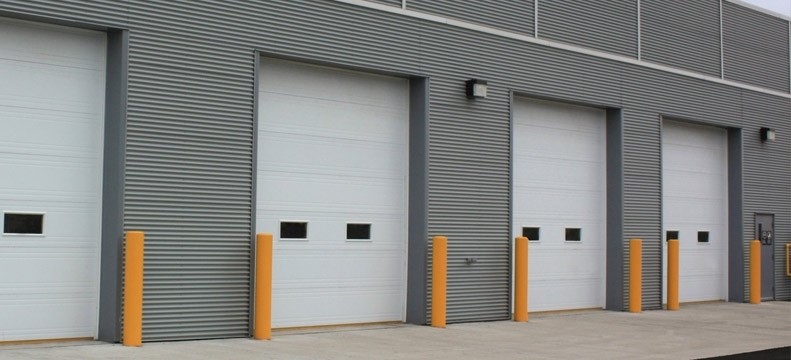
Sectional steel doors are the workhorse of commercial buildings. They consist of horizontal panels hinged together that travel along vertical and horizontal tracks. They offer solid insulation options and work well for climate-controlled environments like food storage or temperature-sensitive manufacturing.
Rolling steel doors coil into a drum above the door opening instead of sliding along ceiling tracks. This design is ideal for buildings with limited headroom or ceiling obstructions. They are extremely durable and common in high-security applications. If you are weighing this option against more traditional styles, it helps to understand the key differences between rolling steel doors and traditional overhead doors before making a decision.
Aluminum and glass doors bring natural light into the building and give storefronts a modern, clean appearance. Auto dealerships, breweries, and restaurants with patio areas often use these for their combination of function and visual appeal.
High-speed doors open and close rapidly, which helps maintain interior temperature and keeps operations moving in busy distribution centers or cold storage facilities.
How to Choose the Right Door for Your Building
Selecting the right commercial overhead door comes down to a handful of practical considerations.
Start with how the door will be used. A loading dock that sees 200 truck deliveries per week has very different demands than a storage unit that opens once a day. High-traffic environments need doors rated for heavy-duty cycle counts and fast operation speeds.
Think about insulation and climate control. If your building is heated, cooled, or humidity-controlled, you need an insulated door with a high R-value. Uninsulated doors might cost less upfront, but they will drive up your energy bills month after month.
Evaluate your security needs. Warehouses storing high-value inventory or sensitive materials should lean toward heavy-gauge steel doors with reinforced tracks and commercial-grade locking systems.
Measure your available headroom and side room. The physical space above and beside the door opening determines which track configuration and door style will actually fit. Rolling doors need less headroom than sectional doors, which is a critical detail in older buildings with low ceilings.
Factor in local building codes and wind load ratings. Properties in coastal or high-wind regions may require doors tested to specific pressure ratings. Getting this wrong can mean failed inspections and costly replacements.
The Bottom Line
The right commercial overhead door protects your property, supports your daily operations, and pays for itself over time through durability and energy savings. Take the time to match the door type to your building's specific needs rather than defaulting to the cheapest or most familiar option. When in doubt, talk to a specialist who can assess your space and recommend the best solution for your situation.