
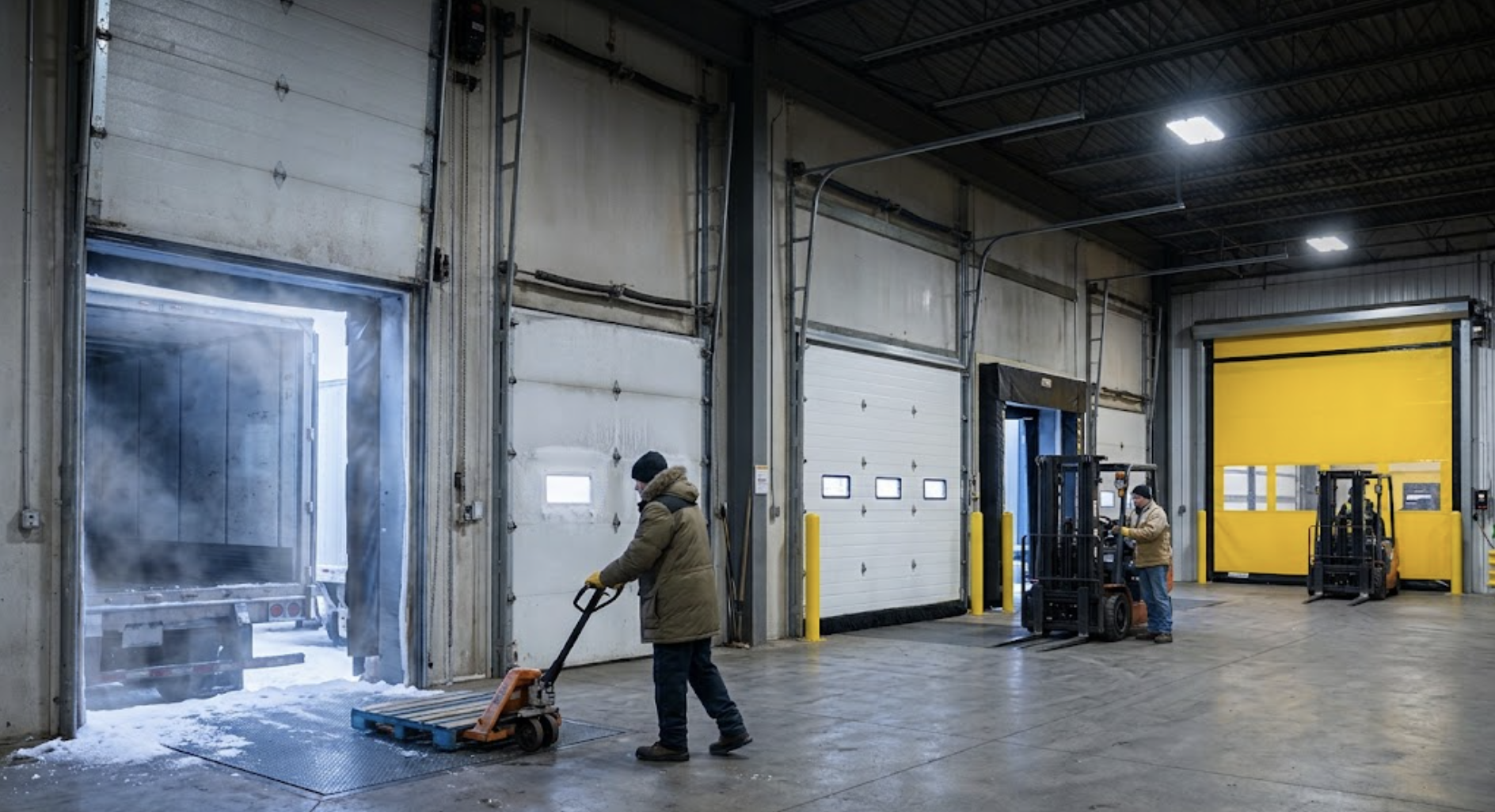
Are Your Loading Docks Driving Up Your Winter Energy Costs?
In most heated warehouses, they are. A standard dock door is roughly 80 to 100 square feet of opening in an exterior wall, and a building with ten or twenty of them has a lot of surface working against the heating system. When those doors are uninsulated, poorly sealed, or open longer than they need to be, warehouse heat loss climbs quickly and shows up on every gas bill from November to March.
Most of that waste is easy to spot, and fixing it rarely calls for a full dock renovation.
Signs Your Docks Are Costing You
You do not need a formal energy audit to know something is off. Walk the dock on a cold morning and look for:
- Unit heaters near the dock running almost nonstop
- Frost or ice on the inside face of door panels
- Snow drifting in under doors or around parked trailers
- Dock staff in parkas while the rest of the building is comfortable
- A gap of several degrees between the dock area and the racking a few aisles in
One of these points to heat escaping at the dock. Two or three together usually mean several positions need work.
The Door Itself
Plenty of older buildings still have single-skin steel dock doors with no insulation at all. Steel conducts heat well, so the whole panel turns into a cold surface. Commercial overhead door insulation makes a real difference here. Insulated sectional doors use a foam core between two steel skins, and polyurethane reaches a higher R-value than polystyrene at the same thickness. Ask about a thermal break between the inner and outer skins as well. Without one, cold travels straight through the steel even when the core is thick.
In a heated building, replacing the worst uninsulated doors tends to be one of the quicker paybacks available.
Dock Seals vs. Dock Shelters
With a trailer parked at the door, the gap around the trailer matters more than the door. The dock seals vs. dock shelters decision comes down to what backs into your building.
Foam seals give the tightest closure and cost less up front, but they need trailers of consistent size and drivers who back in straight. Misaligned trailers tear them apart quickly. Shelters handle a mixed fleet better and leave the full trailer opening clear for forklifts, at the cost of a looser fit. Inflatable seals and shelters fall between the two. They adjust to different trailer heights and still seal closely, which makes them worth considering if you receive everything from 53-foot vans to straight trucks.
An Open Door Wastes Everything Else
Even a well-insulated door does nothing while it is up. Timer-to-close settings on operators with the proper safety devices help, and so does a plain rule that doors come down whenever a position is empty.
High-speed doors take this further. Installed between the dock and the main warehouse, they open only as a forklift passes and close again within seconds, so cold air that gets in at the dock stays there. Keeping the storage area separate from the dock is one of the more effective ways to reduce warehouse heating costs without touching the exterior doors.
Small Leaks Run All Day
Worn bottom seals, torn jamb seals, and open gaps along the sides of pit levelers leak around the clock, not only when trucks are present. These are also the cheapest repairs on the list. New weather seals and brush seals along the pit edges cost a fraction of a new door.
Levelers deserve a closer look. If the pit frame is bent or the deck no longer sits flush, sealing around it only goes so far. Replacing tired units with newer loading dock equipment gives you a proper fit at the pit and a good time to add weather seals from the start.
Where to Spend First
Loading dock energy efficiency improves fastest when the cheap leaks get fixed first and capital spending goes to the positions that need it most. A dock and commercial door safety inspection gives you a door-by-door picture of panels, seals, and levelers, so you can rank upgrades by cost and impact instead of guessing.
After the work is done, a preventative maintenance program keeps seals adjusted, doors closing fully, and operators set correctly through the season, so the savings last past the first winter.